
Simple Breathing Exercises to Enhance Meditation
Meditation offers a powerful sanctuary for mental clarity, emotional balance, and inner stillness. However, sitting down to meditate often reveals how restless the human mind truly is. The moment you close your eyes, thoughts race through upcoming tasks, past conversations, and daily worries. Trying to force the mind into quiet submission often creates frustration, making meditation feel like an uphill struggle rather than a restorative practice.
The breath serves as the natural bridge between the body, the autonomic nervous system, and the mind. Known in traditional practices as pranayama and in modern science as breathwork, conscious control of respiration acts as an immediate anchor for attention. By practicing simple, structured breathing exercises before or during your sit, you can lower physical tension, steady your heart rate, and create the ideal physiological state for a deeper, more focused meditation practice.
The Physiology of Breath and Mental Stillness
To understand why breathwork enhances meditation, it helps to examine how respiration governs your physiological state. Breathing is unique because it operates both automatically and under conscious control. When you pay attention to your breath, you tap into a direct dial for your autonomic nervous system.
Uncontrolled, rapid, or shallow breathing activates the sympathetic nervous system, commonly known as the fight or flight response. This state increases heart rate, elevates stress hormones, and keeps the mind hypervigilant, making sustained meditation nearly impossible. Conversely, slow, deep, and rhythmic breathing activates the parasympathetic nervous system, responsible for rest and digestion.
Slowing down your breath signals safety to the brain, which lowers heart rate, reduces blood pressure, and calms brainwave activity. As physical arousal decreases, mental chatter quiets down naturally, allowing you to transition into deep meditative awareness without force.
Foundational Breathing Patterns for Beginners
If you are new to breathwork, starting with simple techniques establishes a strong foundation for your meditation practice. These exercises require no special equipment and can be performed anywhere.
Diaphragmatic Breathing
Also known as belly breathing, diaphragmatic breathing forms the cornerstone of effective breathwork. Many adults fall into the habit of shallow chest breathing, which restricts oxygen exchange and fosters subtle anxiety.
-
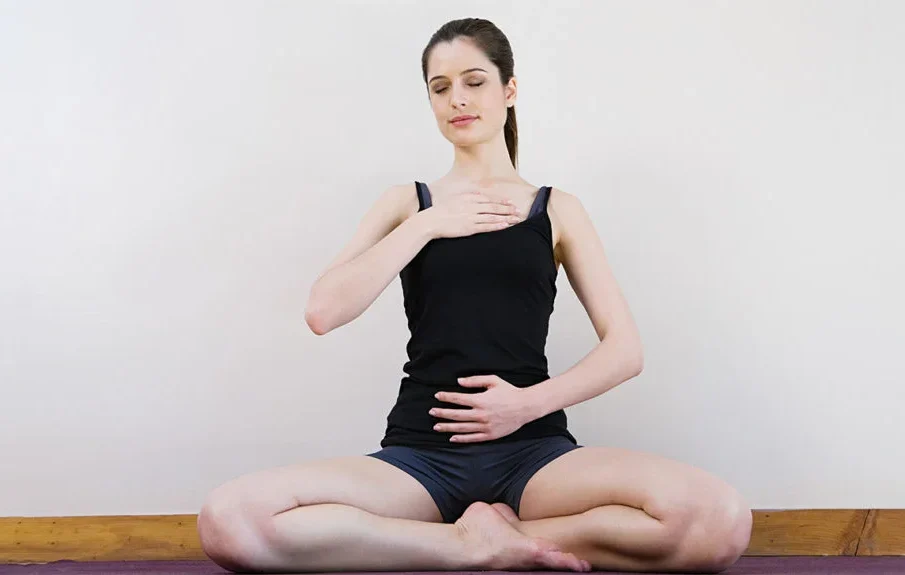
How to Perform: Sit comfortably with a straight spine or lie down flat on your back. Place one hand gently on your upper chest and the other on your abdomen just below your ribcage.
-
The Technique: Inhale slowly through your nose, expanding your stomach outward so the lower hand rises while the upper hand remains still. Exhale smoothly through your mouth or nose, letting your abdomen fall naturally inward.
-
Why It Works: Engaging the diaphragm fills the lower lobes of the lungs, optimizing oxygen delivery and stimulating the vagus nerve to induce immediate physical relaxation.
Box Breathing
Box breathing, or square breathing, uses equal ratios for inhalation, retention, exhalation, and empty holds. This structured technique provides a clear focal point that grounds a scattered mind quickly.
-
How to Perform: Sit upright with relaxed shoulders and rest your hands on your thighs.
-
The Technique: Inhale through your nose for a count of four. Hold your breath gently for four seconds without straining your throat. Exhale smoothly through your nose for four seconds. Hold your lungs empty for four seconds before beginning the next cycle.
-
Why It Works: The rigid structure requires your full attention, leaving no cognitive room for wandering thoughts while steadying your cardiovascular rhythm.
Advanced Breathing Exercises to Deepen Your Practice
Once you feel comfortable with basic techniques, incorporating traditional and targeted breathing exercises can unlock deeper states of meditation and heightened focus.
Alternate Nostril Breathing
Known traditionally as Nadi Shodhana, alternate nostril breathing balances the nervous system and harmonizes energy across the left and right hemispheres of the brain.
-
How to Perform: Sit in a comfortable posture. Bring your right hand up to your face, placing your right thumb on your right nostril and your ring finger near your left nostril.
-
The Technique: Close your right nostril with your thumb and inhale deeply through your left nostril. Close your left nostril with your ring finger, release your thumb, and exhale through your right nostril. Inhale through your right nostril, close it with your thumb, and exhale through your left nostril. This completes one full round.
-
Why It Works: This balanced air distribution clears airway passages, steadying subtle energy channels and establishing quiet mental focus before sitting in silence.
The 4-7-8 Relaxing Breath
Developed as a natural tranquilizer for the nervous system, the 4-7-8 technique extends the exhalation phase to rapidly shift the body into parasympathetic dominance.
-
How to Perform: Place the tip of your tongue against the ridge of tissue behind your upper front teeth and keep it there throughout the exercise.
-
The Technique: Exhale completely through your mouth with a soft whoosh sound. Close your mouth and inhale quietly through your nose for a count of four. Hold your breath for a count of seven. Exhale completely through your mouth for a count of eight.
-
Why It Works: Exhaling for twice as long as you inhale maximizes carbon dioxide exchange and slows the pulse, making it ideal for evening meditation sessions or releasing deep stress.
Bumblebee Breath
Known as Bhramari, this technique uses a soft hum during exhalation to soothe an overactive mind and create internal resonance.
-
How to Perform: Sit comfortably, close your eyes, and place your thumbs gently over your ear cartilage to block out external sound, resting your remaining fingers gently over your eyes.
-
The Technique: Inhale deeply through your nose. As you exhale, make a steady, low-pitched humming noise in the back of your throat, feeling the physical vibration resonate through your head. Repeat for six to eight cycles.
-
Why It Works: The physical vibration stimulates nitric oxide production in nasal passages and creates a rhythmic auditory focus that drowns out racing mental noise.
Integrating Breathwork into Your Daily Meditation Routine
To get the most out of breathing exercises, integrate them intentionally into your overall meditation routine rather than treating them as separate tasks.
Preparing Your Environment and Posture
Choose a quiet, comfortable space free from immediate distractions. Sit upright on a chair or cushion with your hips slightly higher than your knees. Align your spine, stack your head gently over your shoulders, and relax your jaw. An upright posture allows your lungs to expand fully without restricting your diaphragm.
Setting the Sequence
Begin your session with three to five minutes of your chosen breathing exercise. Use this physical breathing phase as a runway to transition out of your busy day. Once your body feels settled and your pulse slows, release the conscious manipulation of your breath and transition directly into quiet meditation, keeping your attention gently anchored on the natural flow of air.
Frequently Asked Questions
Should I breathe through my nose or mouth during breathing exercises?
Nasal breathing is strongly recommended for almost all breathing exercises and meditation practices. Breathing through your nose filters, warms, and humidifies incoming air while releasing nitric oxide, which helps dilate blood vessels and improves oxygen transport throughout your body. Unless a specific technique calls for mouth exhalation, keep your mouth closed and teeth gently separated.
How long should I practice breathing exercises before starting meditation?
A period of three to ten minutes of structured breathing exercise is typically sufficient to shift your nervous system into a relaxed state. Experiment with different durations to see what helps your mind settle most effectively without causing physical fatigue or dizziness.
What should I do if I feel dizzy while practicing breathwork?
If you feel lightheaded, short of breath, or dizzy during any exercise, stop the deliberate control pattern immediately. Allow your breath to return to its natural rhythm, rest comfortably, and ensure you are sitting down safely. Dizziness often occurs from over-breathing or forcing breath retention beyond your current comfort level.
Can breathwork replace traditional silent meditation?
Breathwork and silent meditation serve complementary roles. Breathwork acts as an active, physiological tool to regulate the body and quiet physical restlessness, whereas silent meditation cultivates open awareness and mindful presence. Practicing breathwork right before silent meditation creates an ideal state for effortless quiet practice.
Is it better to practice breathing exercises in the morning or evening?
Breathing exercises are beneficial at any time of day, but the ideal technique depends on your goal. Energizing techniques like equal ratio breathing or short diaphragmatic sessions work wonderfully in the morning to clear mental fog, while extended exhalation techniques like the 4-7-8 method are excellent in the evening to unwind before sleep.
Why do my thoughts wander even when I focus on my breath count?
Wandering thoughts are a normal part of the process for both beginners and experienced practitioners. When you realize your mind has drifted away from counting or breathing, avoid feeling frustrated. Acknowledge the thought neutrally, let it go, and gently return your attention to the next cycle of breath.
How can I keep my back straight during breathwork without straining?
Maintain a neutral spine by sitting on a firm cushion that tilts your pelvis slightly forward, keeping your knees lower than your hips. Alternatively, sit back against an upright chair back for support. Focus on lengthening your spine gently toward the ceiling while relaxing your shoulder blades down your back to avoid creating muscle tension.


